
CRM analytics: the basics for analyzing and adding value to your customer data
- What is analytical CRM?
- The Benefits of an Analytical CRM: Why Should You Adopt It ?
- The limits and drawbacks of analytical CRM
- Different types of CRM: analytical, operational, collaborative
- The main features of analytical CRM
- Analytical CRM technologies, security and architecture
- How to choose the best analytical CRM?
Simple definition: An analytical CRM is software that collects, centralizes and analyzes customer data to transform raw information into actionable insights, enabling companies to optimize their sales and marketing decisions.
Every day, companies accumulate huge volumes of customer data. Purchase histories, interactions on social networks, browsing behavior, exchanges with customer service… This wealth of information often remains under-exploited for lack of suitable tools. Analytical CRM is the answer to this challenge, structuring data to extract concrete decision-making value.
In an economic context where growth is increasingly based on customer knowledge, organizations are looking for solutions capable of transforming their data into a competitive advantage. Analytical CRM offers this promise, combining centralized information, advanced analysis and intuitive visualization.
At 2PACE Academy, we help professionals to develop their skills in Salesforce solutions. This guide introduces you to the fundamentals of analytical CRM, to help you understand how it works, its benefits and practical applications.
What is analytical CRM?
Definition and key principles
Analytical CRM puts data at the heart of customer relations. Unlike traditional approaches focused on contact management, this type of software transforms every interaction into actionable insight. The aim: to move from a retrospective vision to a predictive understanding of customer behavior.
The principle is based on the aggregation of data dispersed in different silos (sales, marketing, customer service) to build a unified view. This centralization enables us to identify patterns invisible to the naked eye, and to forecast future needs. Customer Lifetime Value thus becomes measurable and actionable.
Using an analytical CRM profoundly changes the way teams interact with data. Decisions are no longer based on intuition, but on factual analysis, reducing the risk of error and increasing the relevance of sales actions. This enlightened approach to sales management represents a strategic turning point for organizations.
How does analytical CRM work?
The analytical process follows a sequential logic that guarantees the reliability of product insights:
- Collect: retrieve data from various sources (operational CRM, website, marketing campaigns, social networks)
- Centralization: unified storage in a secure data warehouse or data lake
- Processing: cleansing, enrichment and standardization of data to eliminate duplicates and inconsistencies
Segmentation: creation of homogeneous groups based on behavioral, demographic or transactional criteria - Visualization: interactive dashboards and customized reports accessible to all profiles
Each step determines the quality of the final result. A flaw in data collection or processing compromises the relevance of the analyses. This requirement for rigor explains why implementing an analytical CRM requires a structured methodology.
What kind of data does an analytical CRM collect?
The richness of an analytical CRM comes from the diversity of the sources used.
The table below shows the main categories of data and their strategic use:
| Data types | Example | Use |
| Transactional | Purchase history, amounts, frequency | Customer value analysis and LTV calculation |
| Behavioral | Pages visited, time spent, clicks, shopping cart abandonment | Understanding buying intentions and paths |
| Demographics | Age, location, industry sector, company size | Targeted segmentation and personalization |
| Relational | Support tickets, NPS, complaints, feedback | Satisfaction measurement and churn detection |
| Multichannel | Open emails, social interactions, phone calls | 360° view of the omnichannel customer journey |
Integrating these different sources is one of the major challenges of deployment. Data from heterogeneous systems in a variety of formats requires considerable harmonization work.
Once the data has been collected and standardized, the information on each customer can be used to create relevant segments.
What types of analysis are required?
The analytical options offered by a modern CRM cover a wide spectrum of business needs.
Descriptive analysis answers the question “what happened?” by summarizing past performance. It forms the basis of all reporting and enables the achievement of objectives to be assessed. Predictive analysis anticipates future behavior thanks to machine learning algorithms. It identifies customers at risk of churn or prospects most likely to convert.
Prescriptive analysis goes a step further, recommending the optimal actions to take. It suggests the best contact channel, the ideal timing or the most relevant offer for each segment. By analyzing customer preferences, this approach helps determine priority action levers.
RFM (Recency, Frequency, Amount) segmentation classifies customers according to their economic value. This proven method enables sales efforts to be prioritized on the most profitable segments. Scoring assigns a score to prospects, guiding teams towards opportunities with high conversion potential.
The Benefits of an Analytical CRM: Why Should You Adopt It ?
The 5 major advantages
Adopting an analytical CRM generates measurable benefits at several levels of the organization:
- Precise analysis: clear visualization of trends and performance in real time, enabling greater responsiveness to market developments
- Advanced personalization: messages and offers tailored to each customer’s individual profile, boosting engagement and loyalty
- Sales efficiency: focus on high-potential opportunities with intelligent lead scoring and prioritization
- Strategic steering: decisions based on data rather than intuition, reducing the risk of error
- Opportunity detection: proactive identification of weak signals heralding new trends or emerging needs
These benefits contribute directly to business growth by optimizing every interaction with customers and prospects. To find out more about the benefits of CRM solutions, read our article on the uses and advantages of Salesforce.
How does an analytical CRM help you make decisions?
The insights generated inform strategic choices at all hierarchical levels. A sales manager visualizes performance by segment to adjust quarterly targets. A marketing manager identifies the most profitable campaigns to optimize budget allocation. An executive anticipates market trends to guide the product roadmap.
The predictive dimension considerably strengthens this decision-making aid. Models anticipate churn several weeks in advance, estimate the probability of conversion for each lead, or recommend the best time to contact a prospect. This ability to anticipate transforms the sales posture: teams move from a reactive logic to a proactive approach.
The daily use of these insights creates a data-driven culture within the organization. Employees become accustomed to consulting dashboards before making important decisions, gradually reinforcing the company’s analytical maturity. Our article on the changing face of CRM explores this in-depth transformation.
Improve customer satisfaction with CRM analysis
Anticipating needs radically transforms the customer experience. By detecting signs of disengagement (lower purchase frequency, fewer interactions, repeated complaints), our teams can intervene before the customer actually cancels. This preventive approach significantly reduces the churn rate and preserves customer lifetime value.
Personalized communications reinforce the feeling of consideration. A customer who receives relevant recommendations based on his or her history develops a stronger relationship with the brand. By analyzing behavior on different channels, teams adapt the tone, channel and timing of each message according to identified preferences.
Cohort tracking provides a longitudinal view of satisfaction trends. Teams identify the critical moments in the customer journey when the experience deteriorates, then implement targeted corrective actions to continually refine their approach.
Harness the power of CRM
Learn how to use Salesforce more efficiently!
Which KPIs should be tracked in an analytical CRM?
Data-driven management means defining the relevant indicators for each department.
The following table shows the main KPIs by function:
| Department | Key KPIs |
| Marketing | Customer acquisition cost (CAC), conversion rate by channel, campaign ROI, email engagement |
| Sales | Closing rate, average sales cycle time, average deal value, pipeline coverage |
| Customer service | First response time, resolution time, CSAT, ticket reopening rate |
| Loyalty | Retention rate, customer lifetime value (LTV), Net Promoter Score (NPS), re-purchase rate |
Consolidating these KPIs into unified dashboards provides a cross-functional view of customer performance, facilitating alignment between teams. For marketing teams, our Marketing Cloud training course takes a more in-depth look at these indicators.
The limits and drawbacks of analytical CRM
Technical and organizational drawbacks
Despite its many advantages, analytical CRM does have its drawbacks. Implementation costs represent a significant investment, particularly for SMEs. Beyond the software license, expenses include technical integration, data migration and team training.
Data quality determines the relevance of analyses. Incomplete, obsolete or erroneous data produce misleading insights that lead to the wrong decisions. Prior to any analytical project, data cleansing and enrichment is essential. A rigorous assessment of the available data resources is essential.
The technical complexity of these solutions requires specific skills. Managing the administration of an analytical CRM, creating predictive models or designing advanced dashboards requires expertise that not all organizations have in-house. Implementation often takes several months, with phases of parameterization, testing and fine-tuning.
Increasing the skills of our teams is an essential prerequisite. Without the right training, advanced functionalities remain under-utilized, and return on investment is slow to materialize. Discover our guide to Salesforce training to structure your training path.
Limits to customer communication
Excessive automation risks dehumanizing customer relations. Hyper-personalized communications based on behavioral data sometimes generate a feeling of intrusion or surveillance. Striking the right balance between relevance and privacy is a constant challenge.
Another pitfall is algorithmic bias. Predictive models reproduce or amplify discriminations present in training data. Scoring that systematically disadvantages certain demographic profiles raises ethical and legal issues.
Different types of CRM: analytical, operational, collaborative
What sets analytical CRM apart?
Analytical CRM focuses on the use of business intelligence applied to customer data. Its DNA is based on three pillars: forecasting, segmentation and visualization. Typical users are data analysts, marketing managers, sales directors and strategic managers.
This type of software does not directly manage day-to-day customer interactions. Its role is to analyze the data generated by these interactions to extract actionable insights. To help you make the most of these tools, our Salesforce CRM Consultant job sheet details the skills required.
What are the differences between analytical CRM and operational CRM?
These two approaches meet complementary needs.
The comparative table below clarifies their specific features:
| Criteria | Operational CRM | Analytical CRM |
| Main purpose | Automation of day-to-day processes | Decision analysis and forecasting |
| Target users | Sales representatives, after-sales service advisors, telemarketers | Analysts, managers, directors |
| Actions taken | Execution of commercial tasks | Strategic understanding and anticipation |
| Data processing | Data capture, storage and updating | Evaluation, modeling and visualization |
| Time horizon | Short-term (day-to-day operations) | Medium and long term (strategic) |
Ideally, the two approaches should be coupled: operational CRM feeds data into analytical CRM, which in turn optimizes operational processes thanks to its recommendations.
Differences between analytical CRM and collaborative CRM
Collaborative CRM facilitates the sharing of information between teams (sales, marketing, support, management). It improves internal coordination by ensuring that every employee has the same information about a given customer. Sharing options include shared notes, documents, exchange histories and alerts. This collaborative dimension enhances collective efficiency.
Analytical CRM generates actionable insights from this shared data. It transforms raw information into actionable knowledge. The two approaches naturally complement each other in a mature CRM ecosystem.
CRM vs Business Intelligence (BI)
The boundary between analytical CRM and BI tools is sometimes blurred. Analytical CRM focuses exclusively on customer data: purchasing behavior, economic value, satisfaction, risk of churn. BI takes a broader view, integrating financial, operational, HR and supply chain data. To understand the distinctions with other systems, read our article CRM and ERP: what are the differences?
The combined use of these two approaches provides a 360° view of the company. Modern solutions such as Salesforce CRM Analytics tend to merge these two worlds, offering extended analytical capabilities beyond the strict customer perimeter.
The main features of analytical CRM
Dashboards and Performance Visualization
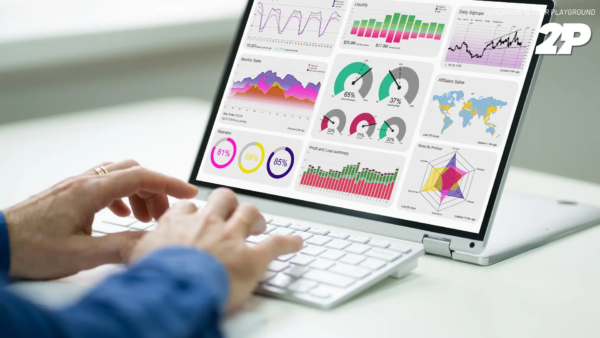
Interactive dashboards summarize key metrics in real time. Trend graphs, heat maps, performance gauges, conversion funnels: visualization makes data accessible to non-technical profiles. Each user configures his or her dashboard according to business priorities.
Interactivity lets you explore data in depth. Clicking on an indicator displays details by segment, period or channel. This drill-down capability makes it easy to identify the root causes of performance or under-performance. A customized version of the dashboard can be created for each user profile.
Customer segmentation and advanced scoring
RFM segmentation remains a tried-and-tested method for classifying customers according to their economic value. Predictive models enrich this approach by integrating behavioral, contextual and temporal variables. This method makes it possible to accurately determine priority segments.
Scoring assigns a probability of conversion or churn to each contact. This scoring makes it possible to prioritize sales and marketing efforts quickly and efficiently. High-scoring leads receive preferential treatment, maximizing the conversion rate.
Automated analysis and intelligent alerts
Segmenting customers and prospects effectively
Automatic notifications signal anomalies or opportunities as soon as they appear. A sudden drop in conversion rate triggers an instant alert. A strategic customer showing signs of disengagement generates a notification to the referring sales rep.
Scheduled analyses produce periodic reports without manual intervention. Built-in AI detects patterns not seen by the human eye and makes recommendations for action. This automation frees up time for high value-added tasks.
Integration with internal and external data
A high-performance analytical CRM communicates with the entire application ecosystem: ERP, marketing automation platforms, social networks, customer support tools, e-commerce solutions. This interoperability guarantees a consolidated view of the customer across all points of contact. Discover the different building blocks of the ecosystem in our article on Salesforce Clouds.
Enrichment with external data (firmographic data, intention signals, market data) enhances the relevance of analyses and opens up new segmentation options. This extension option makes it possible to collect additional information to refine customer knowledge.
Analytical CRM technologies, security and architecture
The technologies behind modern CRM
Artificial intelligence fuels predictive and prescriptive capabilities. Machine learning algorithms identify complex correlations in data and produce reliable propensity scores.
ETL/ELT (Extract, Transform, Load) processes orchestrate data flows between source systems and the analytical repository. Cloud data warehouses offer the scalability needed to absorb growing volumes of data. REST APIs ensure interoperability between heterogeneous systems, whether Salesforce, Microsoft or other solutions.
CRM Analytics vs. Tableau: What Are the Differences ?
CRM Analytics (formerly Einstein Analytics) integrates natively with the Salesforce ecosystem. This proximity simplifies the use of CRM data without migration or complex connectors. Salesforce users can access analyses directly from their usual interface.
Tableau, the general-purpose BI tool acquired by Salesforce, offers superior flexibility for connecting various sources beyond CRM, including Microsoft environments. It is particularly suited to cross-functional analytical projects involving non-customer data. Configuration complexity remains higher, however. Microsoft also offers its own solution with Power BI, providing an alternative for organizations already equipped with the Microsoft 365 ecosystem.
Security, compliance and access management
RGPD compliance imposes strict rules on the processing of personal data. Explicit consent, the right to be forgotten, data portability: analytical CRM integrates these requirements into its architecture.
Governance defines who accesses what information according to their role and scope. Encryption protects sensitive data at rest and in transit. Granular permissions limit the risk of leakage or inappropriate use.
CRM Analytics training
How to choose the best analytical CRM?
Selection criteria
Interoperability with the existing ecosystem avoids the creation of new silos. The selected software communicates easily with existing applications (operational CRM, ERP, marketing automation).
Automation capabilities reduce repetitive manual tasks and accelerate the production of insights. Integrated AI increases the value of analyses by detecting patterns invisible to the human eye. No-code dashboards democratize access to insights without relying on technical teams. Each criterion needs to be evaluated according to the organization’s specific needs.
Security and regulatory compliance guarantee the protection of customer data – a non-negotiable prerequisite. Our guide How to choose the right Salesforce specialization helps to guide this choice.
Which CRM should you choose for advanced marketing analysis?
SMEs prefer accessible solutions with a functional scope adapted to their cost constraints. Simplicity of implementation and rapid deployment are key criteria. To get you off to a good start, read our article Getting started with Salesforce: the 7 essentials.
ETIs are looking for scalability and multi-department integration. They need solutions that can support their growth without a major overhaul.
Large accounts demand advanced analytical capabilities, enterprise governance and premium support. Integration challenges with legacy systems call for proven solutions.
What sets Salesforce CRM Analytics apart ?
Native integration with Salesforce eliminates synchronization friction and reduces technical complexity. Data Cloud unifies first, second and third-party data in a single repository, providing a truly 360° view of the customer.
Einstein Discovery automates predictive analysis without the need for data science skills. Business users create scoring models in just a few clicks, dramatically accelerating time-to-value.
No-code dashboards enable each employee to build his or her own visualizations without involving IT teams. Advanced governance meets the security and compliance requirements of large organizations. For those wishing to specialize, take a look at our Salesforce consultant pathway.
Turn your data into a competitive advantage
Mastering CRM analytics is a strategic skill in an environment where customer data is becoming a company’s most important asset. Organizations that effectively exploit their insights gain in agility, relevance and sales performance.
Investing in a CRM analytics solution involves much more than the purchase of software. The success of the project largely depends on the ability of teams to fully exploit the functionalities offered as a strategic resource. Training is the key to turning technological potential into concrete results.
To develop this expertise, 2PACE Academy offers a comprehensive CRM Analytics training course. Our certified consultants will teach you the best practices for designing impactful dashboards, building relevant segmentations and harnessing the power of Salesforce AI. This training accelerates your skills development and maximizes the return on investment of your analytics solution.